

New CLMS global vegetation properties products
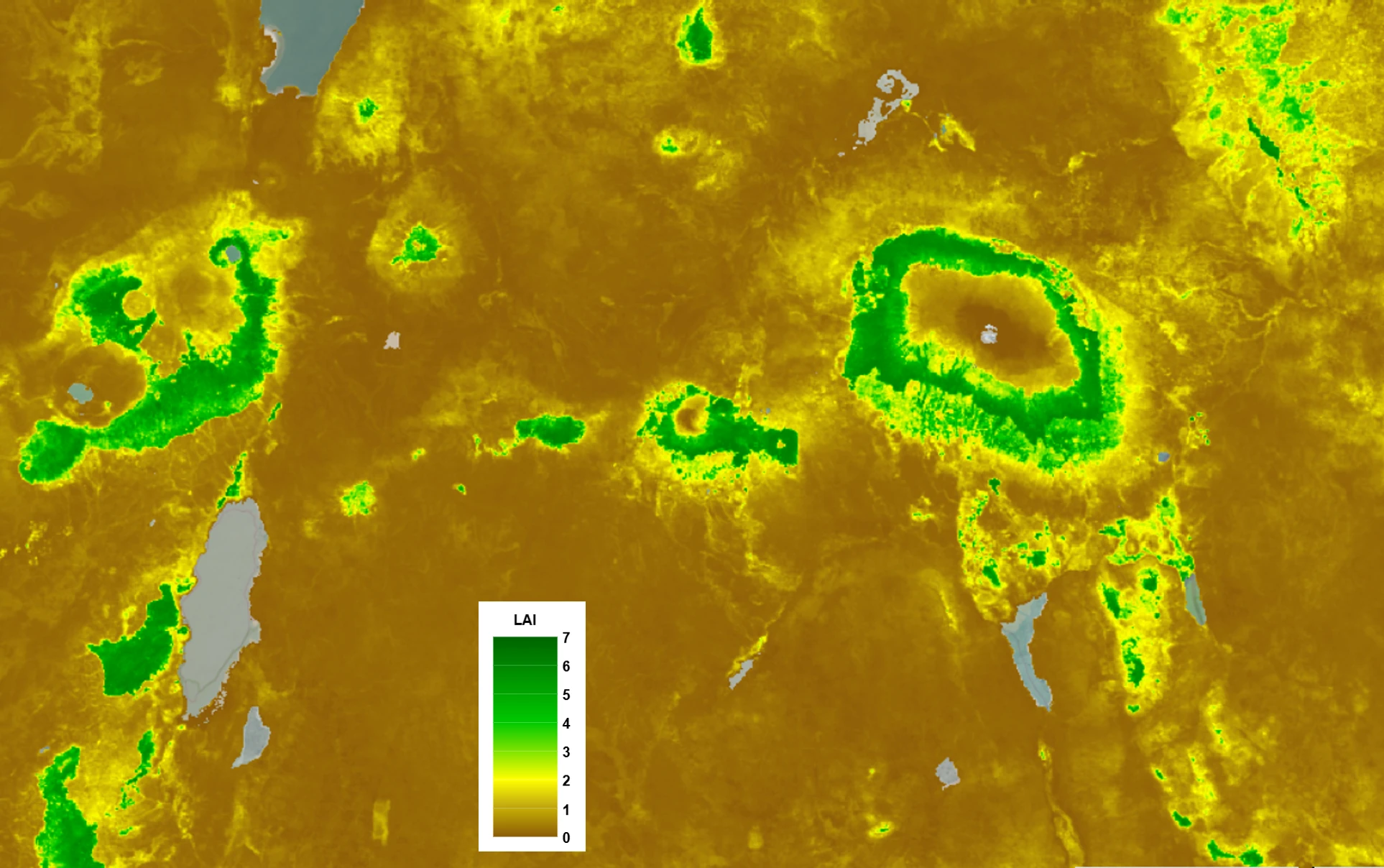
The CLMS LAI, FAPAR, FCOVER V2 is designed as global long-term operational datasets that translate satellite images into exploitable ecosystem monitoring information. Thus, they support a wide range of applications responding to key societal and environmental concerns. For instance, they allow to assess crop and grassland growth and yield, useful to early warning detection system and to define sustainable framing practices that contribute to food security. They also help to monitor the impact of fires, deforestation and landcover change, relevant for protecting biodiversity and addressing people’s concerns about ecosystems degradation. In addition, their assimilation in land surface model improves the characterization of the hydrological cycle, energy and carbon fluxes. Thus, they contribute to better understand the ecosystems functioning and their responses to climate change. This is essential to develop appropriate strategies and policies to reduce greenhouse gas emissions and to improve water-resource management.
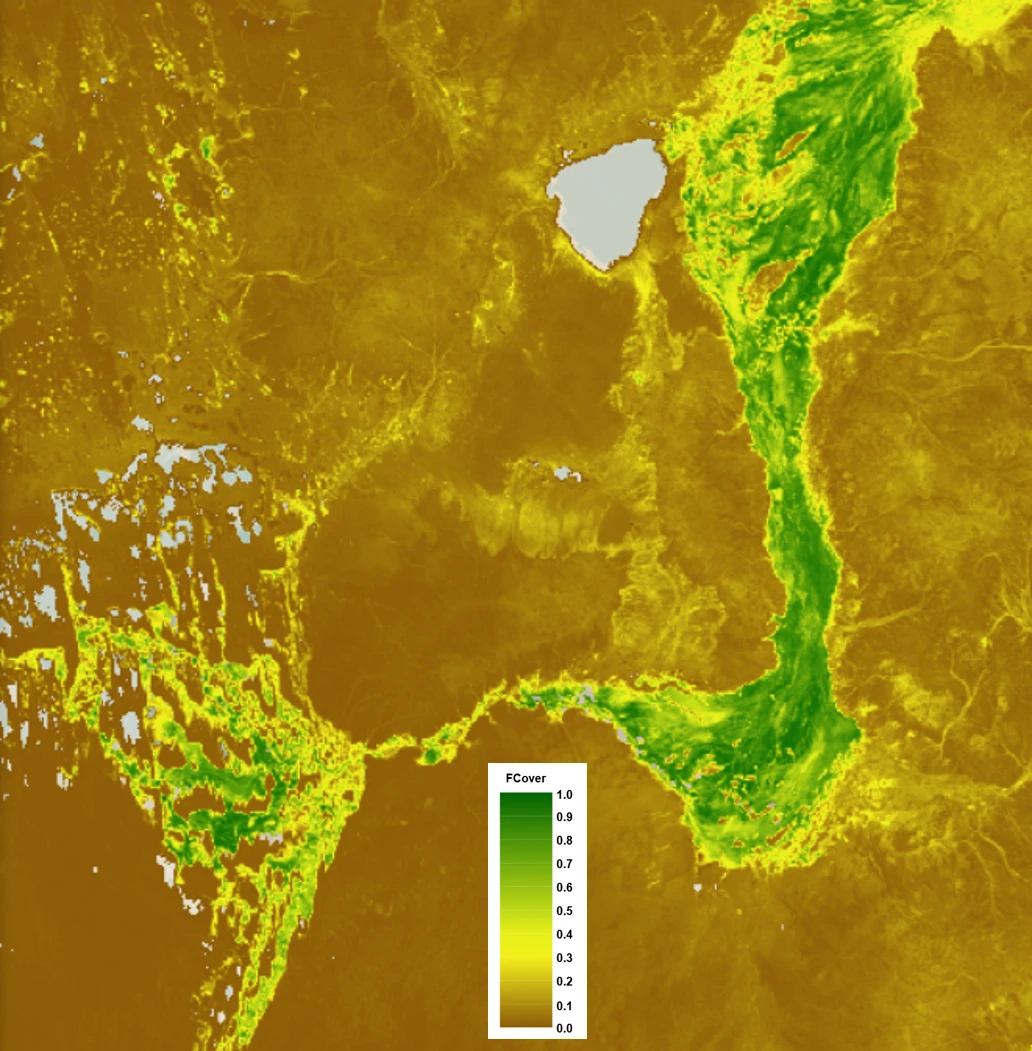
FCOVER over southern Queensland, Australia, on the last dekad of August 2025, showing the green vegetation extent along the ephemeral channels of Cooper Creek.
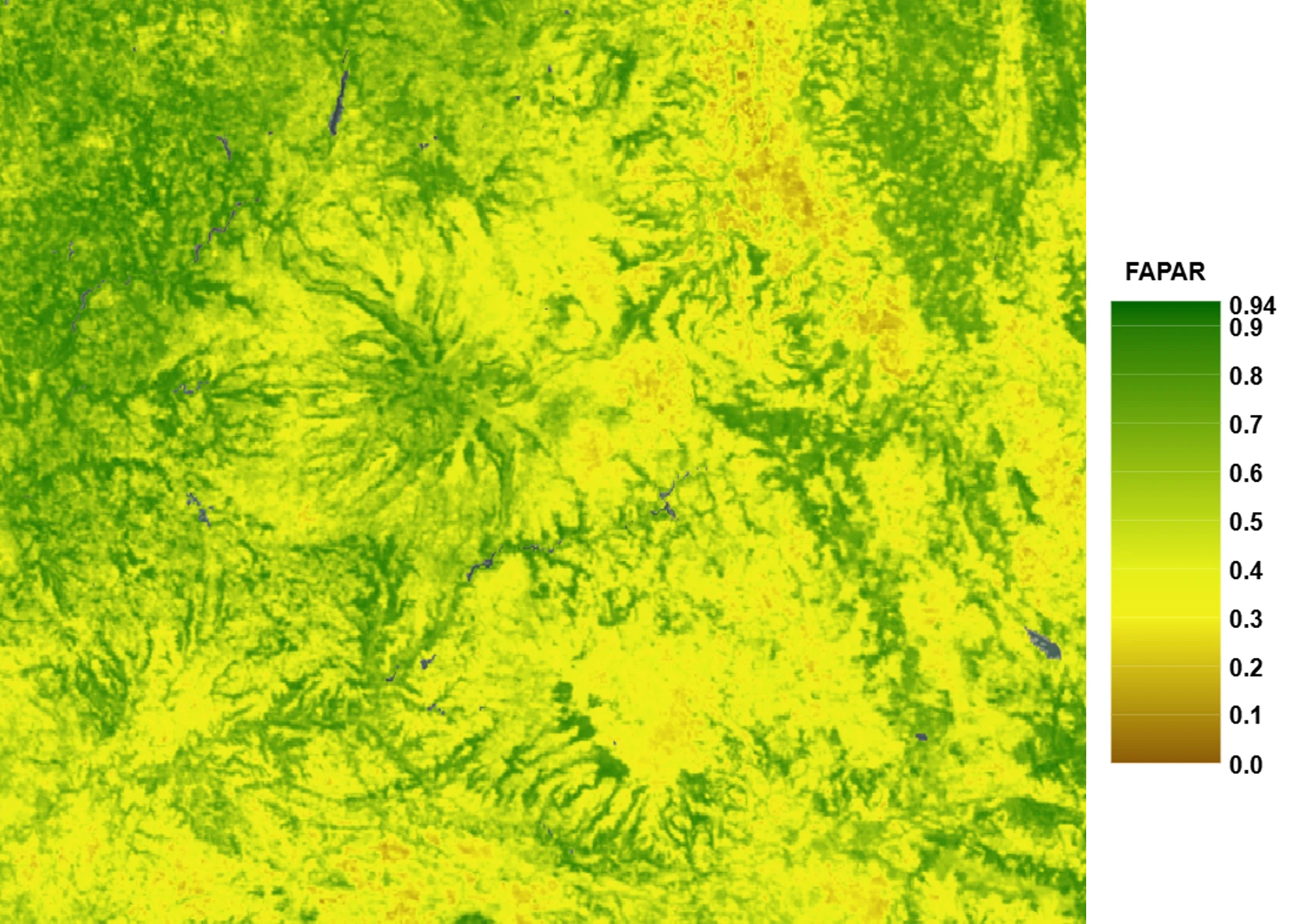
FAPAR over Massif Central, France, on the last dekad of August 2025. Grassland in the valleys and plateaus suffer from drought while forested areas remains photosynthetically active.
Products have encompassed an exhaustive validation procedure following the best practices of the Land Product Validation sub-group of the Committee on Earth Observation Satellites.
The CLMS LAI, FAPAR and FCOVER V2 are delivered with a complete documentation. The products are accessible through the download options of the Copernicus Data Space Ecosystem (CDSE). They are also viewable through the CDSE browser.
The activity has been funded by the European Commission under a contract with the Joint Research Center.